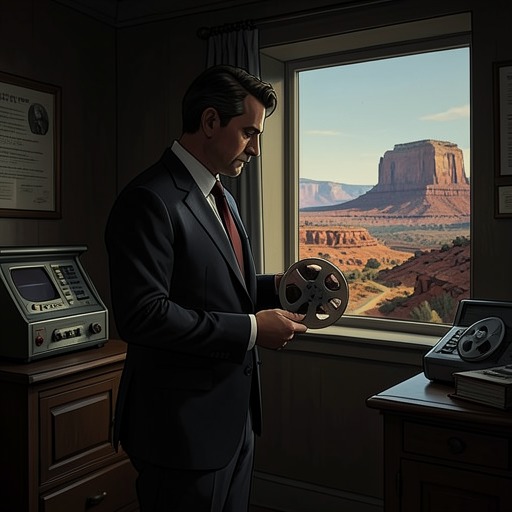
The difference in realism between Hollywood and foreign films
Once Upon a Time in HollywoodThe difference in realism between Hollywood and foreign films is a central distinction in Cliff Booth’s understanding of cinema: Hollywood, in his view, often disguises life behind performance and comforting conventions, while foreign films allow people and events to remain difficult, strange, or morally unredeemed. The contrast grows out of his experience of war, his tastes as a spectator, and his belief that a film should withstand scrutiny rather than simply entertain.
Postwar experience and Hollywood artifice
Cliff’s preference for foreign cinema begins with a sharp divide between what he has witnessed and what American movies present. He returned from World War Two having seen the extremes of human violence, including the heads of Filipino guerrillas mounted on spikes by the occupying Japanese. Against that experience, many Hollywood films struck him as juvenile: their commitment to entertainment for the whole family seemed remote from the horrors civilians elsewhere had faced. In his account, American home-front civilians had been shielded from the conflict’s gruesome details, and Hollywood’s films retained that distance.
The problem was not simply that Hollywood films were entertaining. Cliff felt that even highly regarded performers such as Marlon Brando, Paul Newman, Ralph Meeker, John Garfield, Robert Mitchum, and George C. Scott still sounded like actors. Their characters seemed to react as characters in movies would, with a layer of artifice that kept them from seeming convincing. His response to the newspaper coverage of Anatomy of a Murder makes the distinction comic and precise: he laughed at the claim that the film’s language was shockingly adult, because even the word spermicide could be treated as sensational in a Hollywood production.
Alan Ladd offers Cliff a qualified exception. He likes Ladd’s unshowy presence in contemporary clothes, especially a suit, tie, and snap-brim fedora; in western or military dress, Cliff thinks, Ladd disappears into the costume. The actor’s looks, voice, and manner of fighting matter to him because they do not seem overworked. When Ladd becomes angry, Cliff reads it as a man getting sore rather than an actor performing anger. The exception clarifies the standard: realism is not a matter of prestige or seriousness, but of whether a performance seems to have escaped the machinery of performance.
Foreign films and unsentimental characters
Cliff’s sense of foreign-film authenticity is connected to postwar circumstances. As countries in Europe and Asia slowly resumed filmmaking amid the remains of bombed cities, their cinema, as the narrative describes it, addressed a more adult audience. Films such as Rome, Open City and Big Deal on Madonna Street emerge from a world in which the damage of war was not abstract. For Cliff, that history helps explain why foreign actors and stories can feel closer to lived experience than Hollywood’s carefully protected normality.
His strongest examples are performers whose faces and characters resist familiar American polish. He is drawn to Toshiro Mifune so intently that he sometimes forgets to read the subtitles. He also admires Jean-Paul Belmondo. In Breathless, Belmondo’s character is not merely a charming rogue: Cliff sees him as petty, shabby, and selfish. What matters is that the film does not ask the viewer to excuse or sentimentalize him. Cliff considers that refusal more truthful than Hollywood’s tendency to give contemptible characters a consoling softness they would not possess in life.
That difference leads him to think of foreign films as more like novels: they need not make their central characters likable. The comparison describes a freedom of attention as much as a difference in subject matter. A viewer may stay with a difficult character without being coached toward affection, and a film can remain compelling without turning moral discomfort into reassurance. Cliff finds that possibility intriguing because it lets the screen hold on to people as they are, rather than smoothing them into acceptable entertainment.
A private education in cinema
Beginning in the 1950s, Cliff drives to Beverly Hills, Santa Monica, West Los Angeles, and Little Tokyo to see black-and-white foreign films with English subtitles. His viewing ranges across La Strada, Yojimbo, Ikiru, The Bridge, Rififi, Bicycle Thieves, Rocco and His Brothers, Open City, Seven Samurai, Le Doulos, and Bitter Rice, which he finds intensely sexy. The range matters: foreign cinema is not a single style for him, but a continuing encounter with different ways of seeing and telling stories.
Rick Dalton teases him for going to movies to read. Cliff accepts the joke with a smile but feels proud of reading subtitles and expanding his mind. He likes films that require patience: after twenty minutes, a new Rock Hudson or Kirk Douglas picture may have revealed all it has to offer, while a foreign film may take its full length to disclose what the viewer has seen. He is not impressed merely because a movie is difficult. He still expects it to work as a movie, and he is willing to judge it harshly: he thinks Hiroshima Mon Amour is a failure and considers Antonioni a fraud.
The habit is also solitary. Sunday afternoon becomes Cliff’s foreign-film day, usually spent without the stuntmen around him, who show little interest in film as an art. He values the independence of those screenings: time with Mifune, Belmondo, Bob the Gambler, Jean Gabin, and Akira Kurosawa, rather than a social outing or a professional obligation. At a small cinema in Little Tokyo, Yojimbo convinces him of Mifune but not yet of Kurosawa; he had already admired Seven Samurai, though initially he thought it might be an exception. His curiosity develops by watching, not by treating a director’s reputation as proof.
Realism as a changeable standard
Cliff’s response to foreign films also changes his view of history and perspective. Ballad of a Soldier gives him respect for Soviet allies he had not previously felt; Kanal makes him reconsider his own wartime experience beside others’; and Bernhard Wicki’s The Bridge moves him to feel for German soldiers, something he would have thought impossible. These are not simply new preferences in entertainment. Films unsettle the limits of his sympathy by giving him perspectives he had not approached on his own.
The distinction between Hollywood artifice and foreign-film authenticity is nevertheless Cliff’s judgment, not a rule that every film from one country must obey. His enthusiasm for Alan Ladd already complicates a simple national division, and his willingness to reject Hiroshima Mon Amour and Antonioni shows that foreignness alone does not confer merit. The account also places his taste beside a changing American western. Lancer has a darker, more cynical premise than Bonanza or The High Chaparral, and its director, Sam Wanamaker, seeks a grittier style influenced by Italian westerns. Yet a CBS series airing at 7:30 on Sunday nights cannot reproduce the full violence of the newer films. The contrast therefore describes both an aesthetic preference and a moving boundary: Hollywood can absorb new styles, but Cliff continues to measure realism by whether a film makes its characters and their world feel less protected from life.